Foxglove vs. Hollyhock: Which Tall Flower Should You Grow?
Few plants fill vertical space in a border as gracefully as a foxglove spire or a hollyhock stem. From across the garden they can look like cousins: tall, flower-packed columns rising above the fray. Up close, they are completely different characters. One is a woodland plant that tolerates shade, seeds itself around, and will kill a dog that chews it. The other is a sun-hungry cottage-garden classic that grows taller than most people expect and spends half of every summer fighting a rust fungus. Knowing those differences before you plant saves you a season of guesswork.
At a Glance: The Differences That Decide It
If you only read one part of this, read this list. Everything below is detail on the same five points.
- Height: Foxglove typically 2–5 feet; hollyhock 5–8 feet, sometimes more.
- Lifespan: Foxglove is usually biennial; hollyhock is a short-lived perennial often grown as a biennial.
- Light: Foxglove prefers part shade; hollyhock wants full sun.
- Bloom: Foxglove in late spring; hollyhock from midsummer into early autumn.
- Safety: Foxglove is seriously toxic to people, pets and livestock. Hollyhock is not.
Height and Structure: Two Kinds of Tower
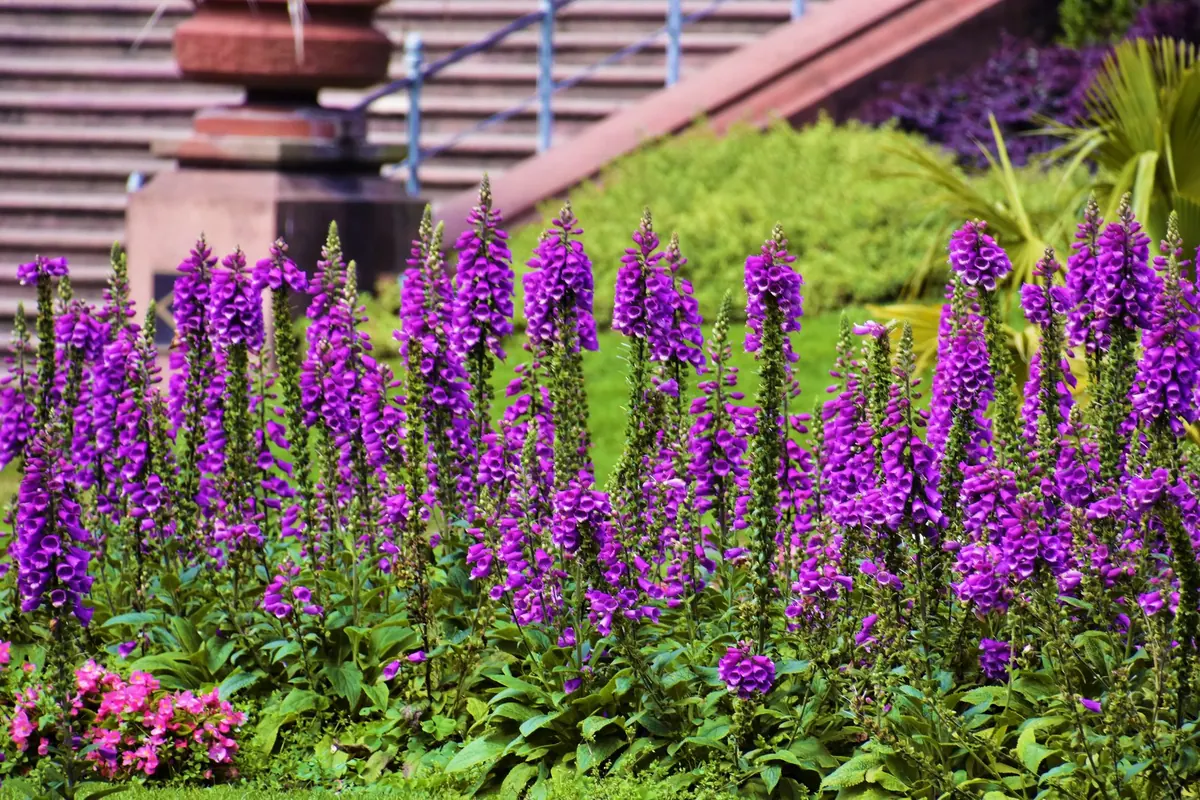
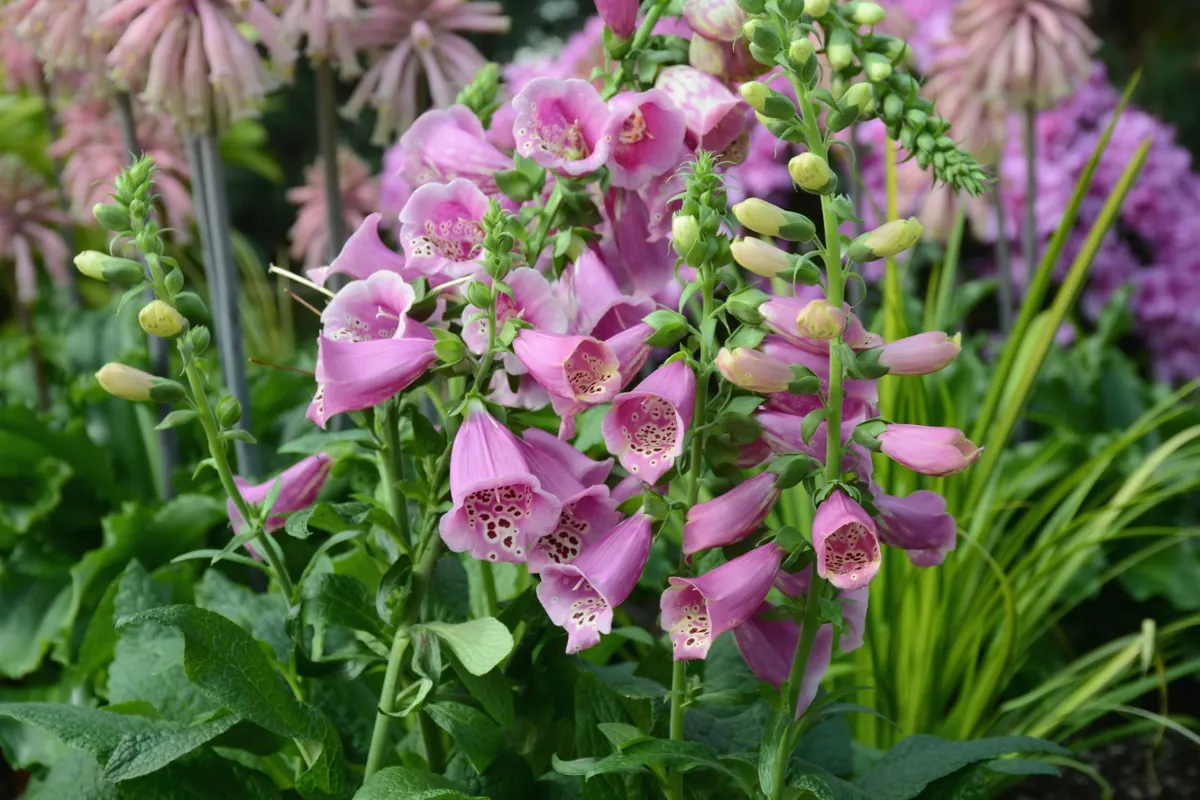
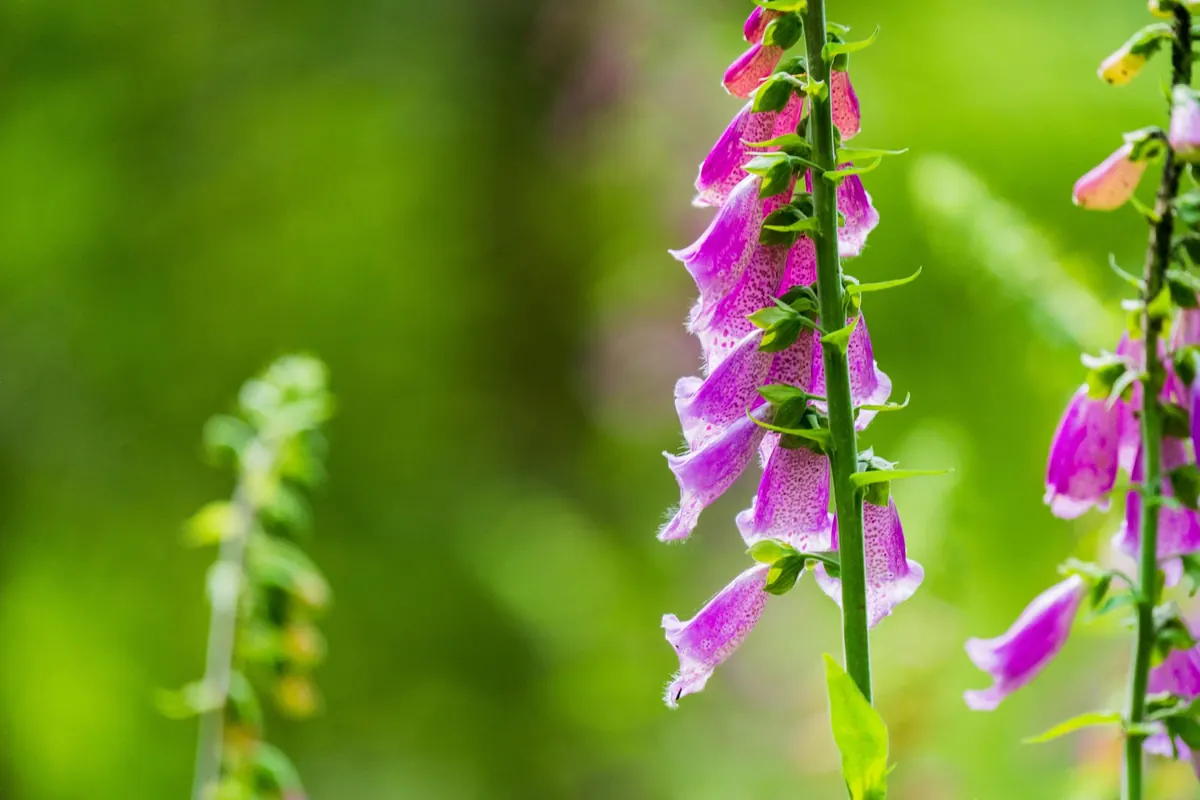
A common foxglove, Digitalis purpurea, usually tops out between two and five feet, with a few well-fed plants pushing past that. The stem is hollow and slightly flexible, and the flowers hang down one side of it like a row of bells, which is why long-tongued bumblebees adore them. In a windy spot, foxgloves bend and sway rather than snap. That movement is part of their charm in a woodland bed.
Hollyhocks are a different scale. Expect five to eight feet from a healthy plant, with stiff, upright stems that look more like bean poles than flower stalks. The blooms are wide and saucer-shaped, opening flat to the sky and along the length of the stem, accessible to almost any bee that visits. Singles have a simple, open look; doubles are ruffled and heavy enough that a summer storm will flatten them. In an exposed site, plan on staking hollyhocks early, before the stems get tall and brittle.
Lifespan: A Biennial Run vs. a Few Lingering Years
Foxgloves are the classic biennial. Year one: a low rosette of soft, grey-green leaves. Year two: a spire, seed, and death. That sounds like a bad deal until you notice how freely they self-sow. Leave two or three spent spikes standing in late summer and you'll find seedlings the following spring, often a few feet from the parent plant. If you want a permanent patch, learn to recognise the rosettes so you don't pull them as weeds. A few species, such as Digitalis grandiflora and Digitalis lutea, are genuinely perennial and much shorter.
Hollyhocks are short-lived perennials, and most gardeners treat them as biennials in practice: strong in year two, decent in year three, tired by year four. Rust speeds that decline. They also self-sow, though the seedlings rarely match the parent's colour, so a single packet of mixed seed can drift from deep maroon to pale apricot over several years. If you want a specific colour, buy named plants or take cuttings rather than relying on volunteers.
Bloom Time and the Shape of the Season
Foxgloves bloom in late spring into early summer, roughly May and June in most temperate gardens, with each spike flowering for four to six weeks. The lowest bells open first and the tip finishes last. If you cut the main spike as the last flowers fade, side shoots often produce a smaller second flush. Sowing seed in two batches, a few weeks apart, spreads the show.
Hollyhocks start later, usually in July, and keep going into September, opening flowers from the bottom of the stem upward. Individual blooms are short-lived, sometimes lasting only a day, but new ones keep coming for weeks. That gives you colour through the hot stretch of summer, just as the foxgloves are finished and going to seed. Planted together, the two hand off the vertical space rather neatly.
Care: Shade and Moisture vs. Sun and Rust
Growing foxgloves
Give them dappled shade or morning sun with afternoon shelter, and soil that holds moisture without staying soggy. They sulk in hot, dry, baked spots and become prone to powdery mildew and aphids there. Mulch with leaf mould or compost, water in dry spells, and let the leaves stay on the plant until they brown. They are rarely troubled otherwise, and deer and rabbits tend to leave them alone.
Growing hollyhocks
Hollyhocks want at least six hours of direct sun and soil that drains well. They tolerate dryness once established, but they hate crowded, humid conditions, which is exactly where rust takes hold. Expect to deal with rust in most gardens: orange-brown pustules on the undersides of leaves, followed by yellowing and drop.
- Space plants 18–24 inches apart so air moves between them.
- Water at the soil, never over the leaves.
- Pick off affected leaves at the first sign and bin them, don't compost.
- Clear fallen leaves and old stems in autumn, since the fungus overwinters in debris.
- Cut stems back after flowering to reduce reinfection.
Toxicity: Where the Comparison Stops Being About Looks
This is the point that should decide placement in any garden with children or pets. Every part of a foxglove is poisonous, including the roots, leaves, flowers and seeds, and the toxins involved are cardiac glycosides, the same family of compounds used in certain heart medicines. Dried leaves remain dangerous, so a foxglove cut and dropped in a compost heap or a vase is still a hazard. Wear gloves when handling them, wash your hands afterwards, and plant them away from paths where small children and dogs wander. If you suspect someone has eaten any part of a foxglove, contact a poison control service or a vet immediately rather than waiting for symptoms. For a fuller picture of what is and isn't safe in a family garden, talk to your vet or a medical professional.
Hollyhock is considered non-toxic to people and pets. The main complaint is mechanical: the stems and leaves are covered in stiff hairs that can irritate bare skin, which matters when you're staking or cutting back. That's a good reason to wear gloves, not a reason to avoid the plant.
Which One Belongs in Your Garden?
Choose foxgloves if you garden under trees, want something that seeds itself into a loose colony, and love watching bumblebees work. They suit a partly shaded bed, a north-facing border or a woodland edge, and they need almost no maintenance beyond watering and a willingness to leave a few seed heads standing.
Choose hollyhocks if you have a sunny wall, fence or back border crying out for height, and you want colour in July and August rather than June. Plan for staking and for rust, and you'll get the cottage-garden look that has kept them in cultivation for centuries.
There is no rule against growing both. Put hollyhocks at the back in full sun, foxgloves in front and to the shadier side, and mark your foxglove rosettes with a small stick in autumn so you don't hoe them by mistake in spring. Sow foxglove seed in June or July for flowers the following year, set hollyhock out in spring after the last frost, and let the season run from one spire to the next.
Photo: Masood Aslami / Pexels