Dwarf Foxgloves for Containers and Small Gardens
Foxgloves get filed away as back-of-the-border plants, which is exactly why small gardens tend to skip them. The genus is far more accommodating than its reputation. Several cultivars and smaller species will flower happily in a 25–30cm pot, and a few of them bloom in their first year from seed, so you don't have to sacrifice a season waiting for the show.
The catch is that containers are a different environment: compost dries faster, roots run hotter, and winter wet kills more foxgloves than cold ever does. Get those three things right and a modest patio can hold half a dozen spires in cream, pink, yellow and rust.
Why Dwarf Foxgloves Suit Containers
Pots give you control over soil and light. Digitalis purpurea is a woodland plant that wants humus-rich ground and dappled shade, a combination that is fiddly to arrange in a mixed border but simple to build in a container you can shift out of the harshest afternoon sun.
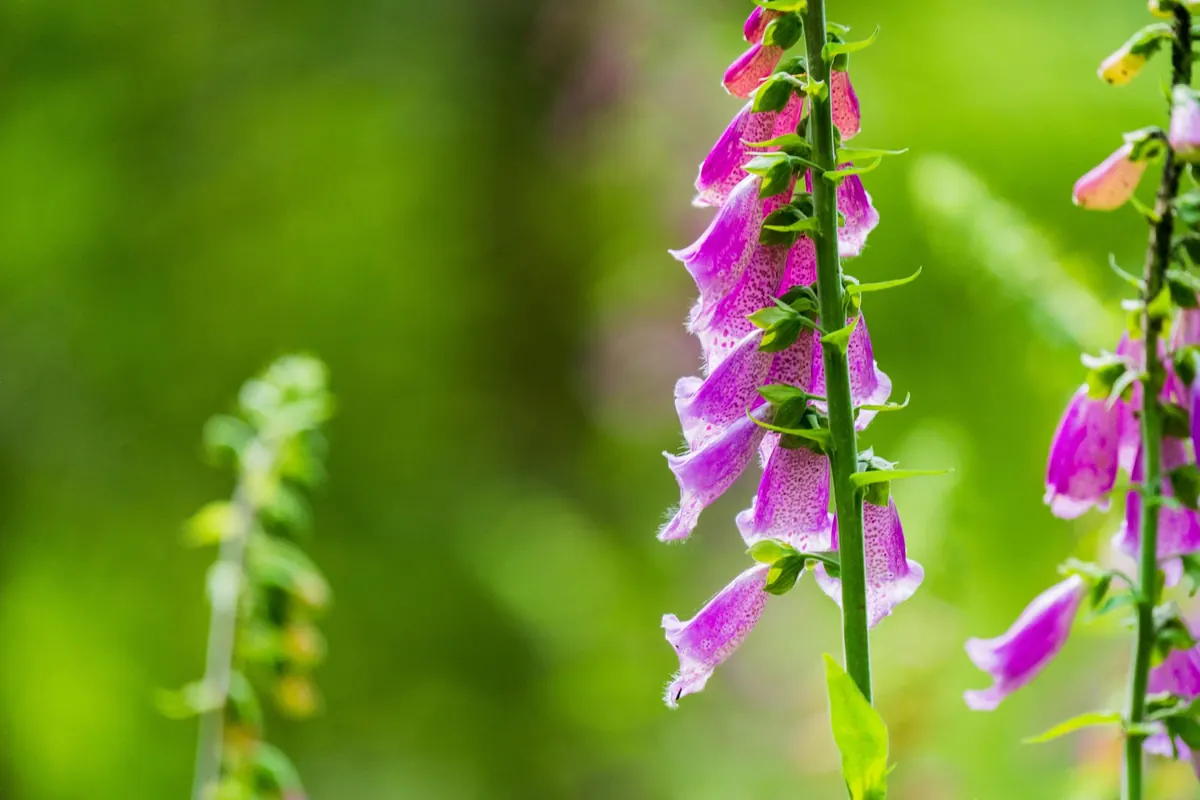
Height is the other advantage. Plants that finish at 50–70cm bring their flowers to eye level, where you can actually see the speckled throats and watch bumblebees work up the spike. At 1.5m you mostly admire the backs of flowers. Compact types also need far less staking, and top-heavy spires in a windy patio corner snap easily. Then there is the shuffling: a pot of foxgloves can sit front and centre while it blooms, then move behind the tomatoes while it sets seed.
Compact Cultivars Worth Growing
Selections that flower in their first year
If you want blooms the same season, look for dwarf strains of Digitalis purpurea and the F1 series.
- 'Foxy' — an old, dependable strain around 60–75cm, with pale pink, cream and white flowers that open from the bottom upwards. Sown early it flowers the first year. In shade the stems can lean, so give it a discreet stake in exposed spots.
- Dalmatian series — roughly 50–60cm in cream, peach, purple and white. The neatest of the first-year group and the one I would choose for a 25cm pot on a step or windowsill ledge.
- 'Camelot' series — often listed alongside Dalmatian, but at 90–120cm it is not dwarf, whatever the label suggests. It flowers in its first year and looks well against a wall. It is the wrong plant for a small pot.
Perennials for shadier pots
Digitalis grandiflora carries soft yellow bells on 60–90cm stems and returns reliably year after year. It takes more sun than D. purpurea provided the compost stays reasonably moist. Digitalis lutea is lighter and airier, with small cream flowers and a habit of seeding itself gently around. Both are happier in a 35cm pot than a small one, and both look better with a low companion at their feet — a hardy geranium or a heuchera — to cover the bare ankles.
Smaller species for sharp drainage
Digitalis parviflora is the one I recommend most often for containers. At 45–60cm it produces narrow chocolate-brown spikes, stands without staking and tolerates drier compost than its relatives. Digitalis obscura is shorter still, with amber and rust flowers, and needs gritty, sharply drained compost and a sheltered sunny spot; in cold, wet climates a pot you can move under cover is genuinely an advantage. Digitalis thapsi 'Spanish Peaks' stays around 40cm with pink-purple flowers, and Digitalis lanata offers grey, woolly foliage with creamy-brown flowers. All three resent sitting wet.
One caution: catalogues call anything under a metre "dwarf". Read the height on the packet before you buy, not the marketing line on the front.
Pots, Compost and Drainage
Depth matters more than width. Foxgloves root deeply, so aim for at least 30cm of compost even if the pot is narrow. A 25–30cm pot suits one compact plant; go to 35–40cm for a group of three or for any of the taller perennials.
Use a peat-free multipurpose compost cut with 20–25% horticultural grit or perlite. Foxgloves rot in winter wet, and drainage is the single change that saves the most plants. Stand pots on feet rather than in saucers, and never let a saucer hold water through the winter. Terracotta dries out faster and suits these plants well; plastic holds moisture longer but heats up more in full sun.
Care Through the Year
Check pots daily in summer and water in the morning, soaking until it runs through. Feed lightly: a balanced liquid feed at half strength every two or three weeks until buds form, then switch to a tomato-type feed. Heavy nitrogen produces lush leaves and disappointing flowers.
Deadhead spent spikes low down to encourage side shoots and a longer season, but leave two or three stems to ripen seed if you want seedlings for free. Biennial forms die after flowering; pull them, refresh the compost and replant the gap. Perennials such as D. grandiflora can be cut right back to the ground after blooming, which usually produces a fresh rosette of leaves.
In winter, ease off watering, move pots against a sheltered wall and raise them clear of standing water. Cold rarely kills them; sodden compost does.
Raising Your Own from Seed
- Sow Digitalis purpurea on the surface and press the seed in. It needs light to germinate, so do not cover it with compost.
- Sow indoors in January to March for first-year flowers, or in June and July for sturdier plants the following spring.
- Keep trays around 15–18°C. Once seedlings are large enough to handle, prick them into 9cm pots and grow them cool and bright rather than warm.
- Move plants into their final container in late summer or early autumn so roots establish before winter.
- Protect young plants from slugs, which find them irresistible.
Problems to Watch
Aphids cluster on flower spikes in early summer; a firm spray of water dislodges most of them. Powdery mildew appears on crowded, dry-stressed plants, so leave air between pots. Leaf spot and root rot both point back to compost that stays too wet.
Foxgloves are toxic in all parts if eaten, so keep pots out of reach of children and pets, wear gloves if you are handling a lot of foliage, and wash your hands afterwards. If you suspect someone has eaten any part of the plant, contact a doctor or a vet promptly rather than waiting for symptoms.
A Simple Patio Plan
Three pots are enough to start. Put a Dalmatian in cream in a 25cm pot at the front, a Digitalis parviflora with a hardy geranium in a 35cm pot behind it, and a June-sown pot of 'Foxy' coming on for next spring. Repeat one colour across the group to pull it together, and stand the pots close so the foliage shades the compost and slows evaporation. Keep one spare pot of seedlings in reserve each year — with short-lived plants, succession matters more than any single specimen.
Photo: Ryan Lansdown / Pexels